
 Image 1 of 1
Scientific Name: Neocaridina davidi
Common Name: Cobalt Blue Shrimp
Care Level: Easy
Adult Size: About 1–1.5 inches
Temperature: 68–78°F
pH: 6.5–8.0
GH: 6+ dGH
KH: 2+ dKH
Diet: Omnivore / Biofilm Grazer
Minimum Tank Size: 5 gallons recommended
Breeding: Freshwater, direct development
Placement: Freshwater / Planted Aquariums
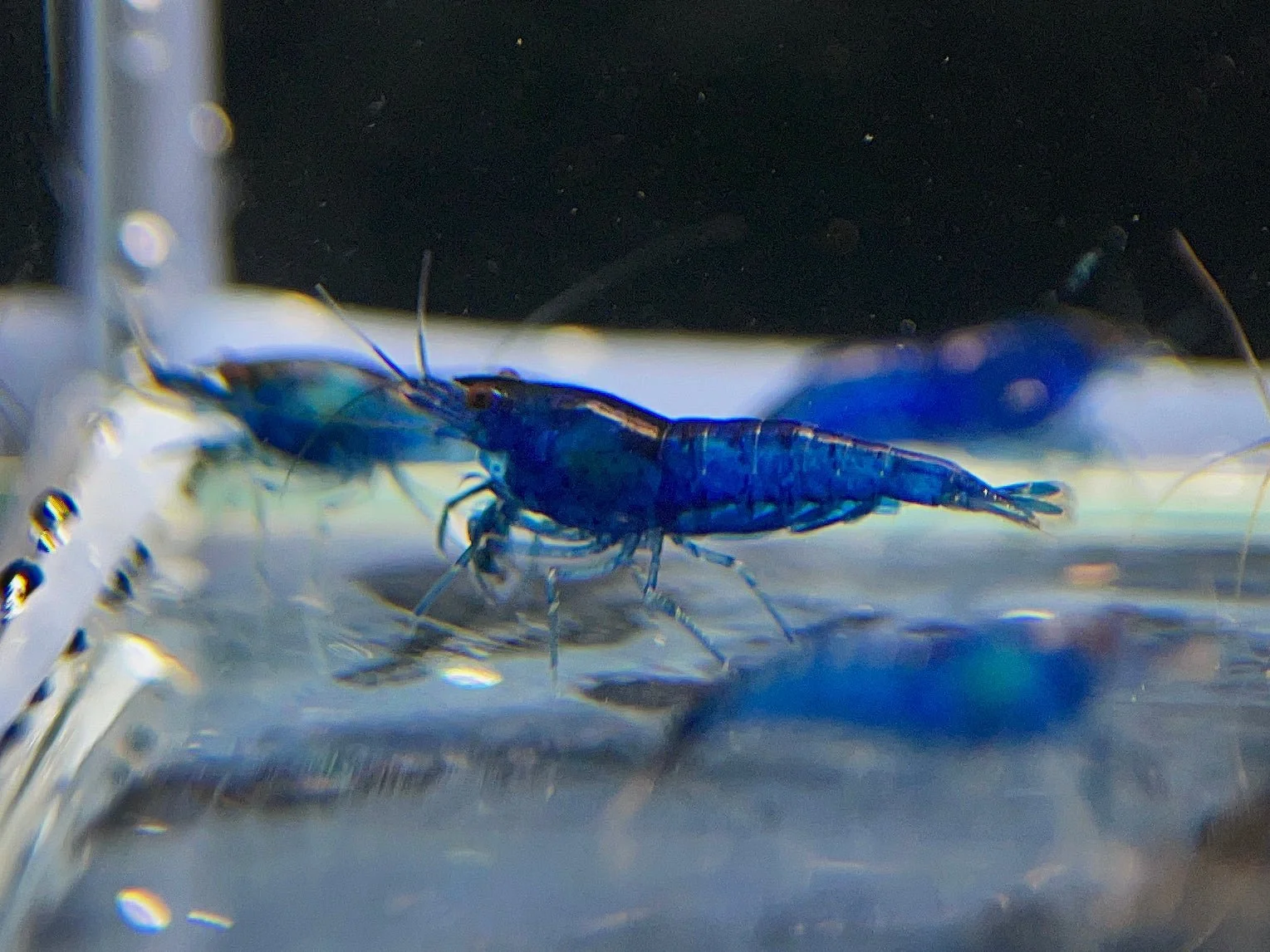
Cobalt Blue Neocaridina Shrimp are a selectively bred color variety of Neocaridina davidi, known for their deep blue coloration and constant grazing behavior.
They spend much of the day picking through biofilm, algae, plants, driftwood, rockwork, and other aquarium surfaces. They do especially well in mature, cycled aquariums with plenty of grazing surfaces and cover.
Our Cobalt Blue line is selected for strong blue coloration, but individual shrimp will naturally vary in shade, opacity, size, sex, and age.
Cobalt Blue Shrimp graze naturally throughout the day. Supplemental foods can include:
Quality shrimp pellets
Algae-based foods
Biofilm-supporting foods
Blanched vegetables
Occasional protein-rich shrimp foods
Avoid overfeeding, especially in established shrimp tanks with plenty of natural biofilm.
For best results, provide:
A mature, fully cycled aquarium
Sponge filtration or a protected filter intake
Mosses and other live plants
Driftwood, botanicals, or rockwork
Stable GH and KH
Plenty of biofilm and grazing surfaces
Stable water parameters are generally more important than chasing one exact number.
Shrimp-only aquariums are best for breeding and maximizing shrimplet survival.
Peaceful nano fish may coexist with adult shrimp, but any fish capable of eating a shrimplet should be assumed to do so. Dense plants, moss, and hardscape can improve survival.
Cobalt Blue Neocaridina can breed readily when mature males and females are present and aquarium conditions are stable.
Females carry eggs beneath the abdomen until fully formed shrimplets hatch. The young do not require a saltwater larval stage.
If maintaining strong Cobalt Blue coloration is important, selective breeding is recommended. Lower-color offspring may appear over time.
Different Neocaridina color varieties can interbreed.
If you want to maintain the Cobalt Blue line, keep them separate from other Neocaridina color strains.
Live animals naturally vary in size, shade, pattern, and color intensity.
Product photos are representative of the line and do not guarantee that every individual will look identical.
Color can also vary based on:
Age
Sex
Stress
Lighting
Substrate
Background
Diet
Aquarium conditions
Scientific Name: Neocaridina davidi
Common Name: Cobalt Blue Shrimp
Care Level: Easy
Adult Size: About 1–1.5 inches
Temperature: 68–78°F
pH: 6.5–8.0
GH: 6+ dGH
KH: 2+ dKH
Diet: Omnivore / Biofilm Grazer
Minimum Tank Size: 5 gallons recommended
Breeding: Freshwater, direct development
Placement: Freshwater / Planted Aquariums
Cobalt Blue Neocaridina Shrimp are a selectively bred color variety of Neocaridina davidi, known for their deep blue coloration and constant grazing behavior.
They spend much of the day picking through biofilm, algae, plants, driftwood, rockwork, and other aquarium surfaces. They do especially well in mature, cycled aquariums with plenty of grazing surfaces and cover.
Our Cobalt Blue line is selected for strong blue coloration, but individual shrimp will naturally vary in shade, opacity, size, sex, and age.
Cobalt Blue Shrimp graze naturally throughout the day. Supplemental foods can include:
Quality shrimp pellets
Algae-based foods
Biofilm-supporting foods
Blanched vegetables
Occasional protein-rich shrimp foods
Avoid overfeeding, especially in established shrimp tanks with plenty of natural biofilm.
For best results, provide:
A mature, fully cycled aquarium
Sponge filtration or a protected filter intake
Mosses and other live plants
Driftwood, botanicals, or rockwork
Stable GH and KH
Plenty of biofilm and grazing surfaces
Stable water parameters are generally more important than chasing one exact number.
Shrimp-only aquariums are best for breeding and maximizing shrimplet survival.
Peaceful nano fish may coexist with adult shrimp, but any fish capable of eating a shrimplet should be assumed to do so. Dense plants, moss, and hardscape can improve survival.
Cobalt Blue Neocaridina can breed readily when mature males and females are present and aquarium conditions are stable.
Females carry eggs beneath the abdomen until fully formed shrimplets hatch. The young do not require a saltwater larval stage.
If maintaining strong Cobalt Blue coloration is important, selective breeding is recommended. Lower-color offspring may appear over time.
Different Neocaridina color varieties can interbreed.
If you want to maintain the Cobalt Blue line, keep them separate from other Neocaridina color strains.
Live animals naturally vary in size, shade, pattern, and color intensity.
Product photos are representative of the line and do not guarantee that every individual will look identical.
Color can also vary based on:
Age
Sex
Stress
Lighting
Substrate
Background
Diet
Aquarium conditions