
Freshwater Shrimp
Shrimp from tanks we actually keep.
Neocaridina maintained through real shrimp systems in our fishroom, with a focus on healthy livestock, stable husbandry, useful advice, and color lines worth keeping.
Choose Your Colony
Same species. Very different look.
Most of our shrimp here are color varieties of Neocaridina davidi. Husbandry is similar, but the line matters when you want to maintain a particular color or pattern over generations.
Red and clear contrast.
Red Rilis carry the classic Rili pattern, with red pigmentation separated by clear or translucent sections.
Shrimp Husbandry
Stability matters more than chasing a perfect number.
Neocaridina are adaptable, but sudden change is still stressful. Mature grazing surfaces, stable mineral content, safe filtration, and sensible acclimation matter more than constantly adjusting water toward somebody else's exact target.
Give them something to graze.
Biofilm, plants, moss, wood, and established hardscape provide constant grazing surfaces.
Protect the intake.
Sponge filtration or protected intakes reduce the risk of small shrimp and shrimplets being pulled into a filter.
Keep the minerals stable.
GH and KH matter, but abrupt changes can be more problematic than being slightly away from a preferred target.
Assume fish may eat babies.
Any fish capable of eating a shrimplet should be assumed to do so.
Available Neocaridina
Pick the line you want to keep.
Live animals naturally vary in size, shade, pattern, sex, age, and color intensity. Product photography represents the line rather than guaranteeing identical individuals.
Red Rili
Red pigmentation broken by clear or translucent sections.
Blue Diamond
A blue line selected for rich coloration with natural variation between individuals.
Cobalt Blue
A deep-blue line for planted displays and dedicated colonies.
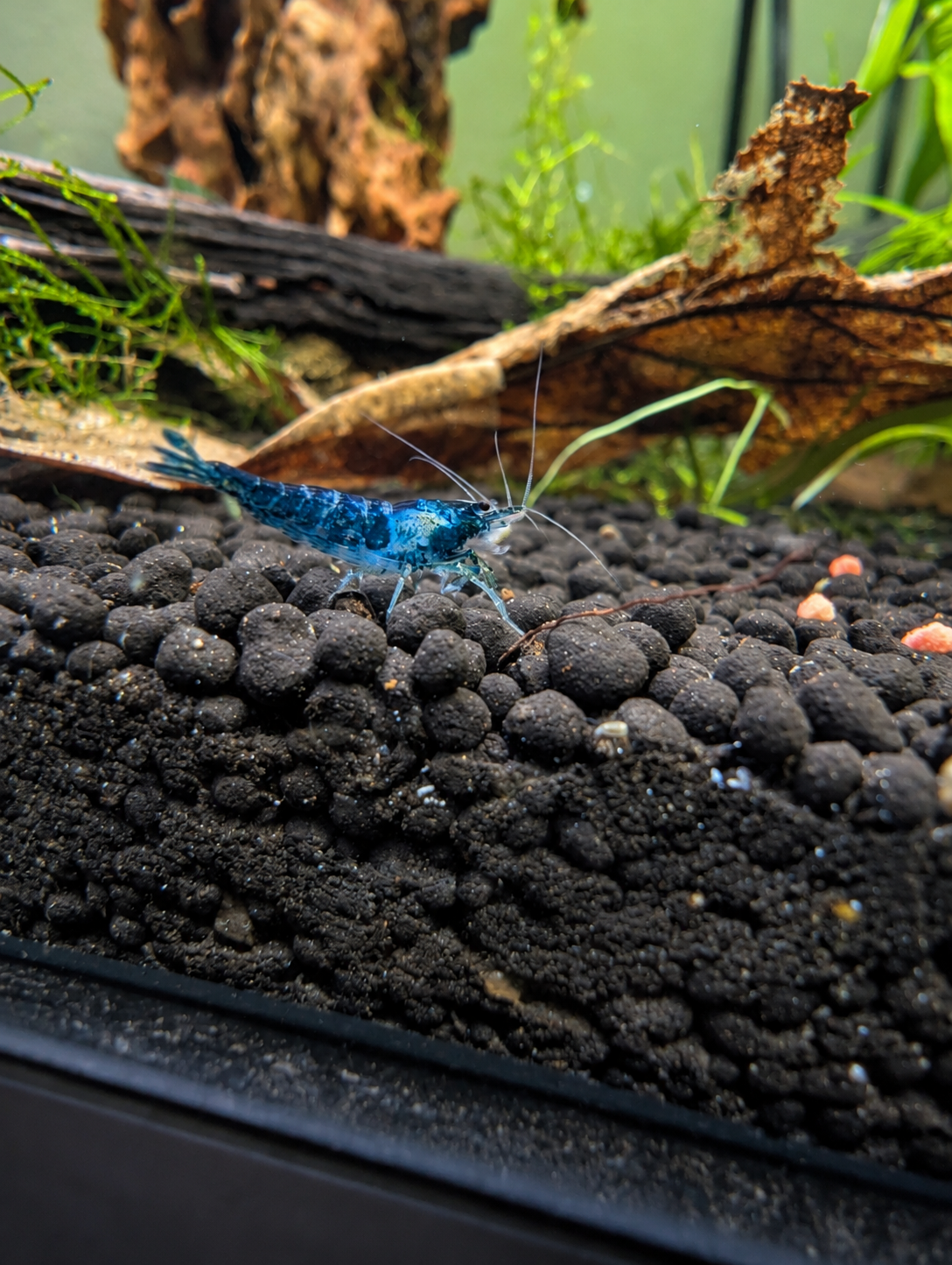
Black
Dark-bodied Neocaridina with strong contrast against planted backgrounds.
Red
The classic red line with strong contrast against plants and dark substrate.
Cull Neocaridina
Healthy Neocaridina outside the color goals of our selectively maintained lines.
Building a Colony
Buying shrimp is easy. Building the colony takes the tank.
A breeding colony depends on mature grazing surfaces, cover for shrimplets, stable water, protected filtration, and enough animals to establish a workable breeding group.
Other Invertebrates
Snails have a place here too.
Different snails fill different niches. Some graze surfaces, some move through substrate, and some are simply worth keeping on their own.
Pond Snails
Prolific generalist snails that graze and scavenge throughout freshwater systems.
Malaysian Trumpet Snail
Burrowing snails commonly found moving through sand and other fine substrates.
Ivory Mystery Snail
A larger ornamental freshwater snail with active grazing behavior and pale shell coloration.
Bladder Snails
Small prolific scavengers that graze aquarium surfaces and decomposing material.
Ramshorn Snails
Coiled-shell snails that graze surfaces and consume leftover organic material.
Broken Arrow / Tulsa
Livestock is handled differently from a bottle on a shelf.
Local pickup lets us coordinate timing, keep livestock in our systems until handoff, and provide acclimation or tank-specific guidance when useful.
Reserved Aquatics
Not sure shrimp belong in your tank?
Send us the tank size, current livestock, and basic water parameters. We would rather help determine whether Neocaridina are a good fit before you buy them.